Terms of service review checklist for marketplaces teams
If you run an online marketplace, whether it's a freelance platform, reseller network, or peer-to-peer service, your terms of service are the legal backbone holding everything together. They protect your platform, set expectations for buyers and sellers, and outline what happens when disputes arise. But drafting and reviewing marketplace terms is complicated. Miss a clause, and you expose your business to liability. Include the wrong language, and you push away honest users or invite regulatory

Photo by Markus Winkler from Pexels
If you run an online marketplace, whether it's a freelance platform, reseller network, or peer-to-peer service, your terms of service are the legal backbone holding everything together. They protect your platform, set expectations for buyers and sellers, and outline what happens when disputes arise. But drafting and reviewing marketplace terms is complicated. Miss a clause, and you expose your business to liability. Include the wrong language, and you push away honest users or invite regulatory trouble.
This checklist walks marketplace teams through the essential review steps, from liability limits to payment terms to dispute resolution. We'll show you what to look for, why it matters, and how to catch red flags before they become problems.
TL;DR
- Marketplace terms must cover user eligibility, payment processing, dispute resolution, and liability limits to protect both the platform and its community.
- Focus on clauses that define who owns user data, how you handle payments, and whether arbitration or court action applies to conflicts.
- Use a structured review process: assign ownership, gather all current terms, mark sections for legal input, and document changes with version control.
- Automate discovery of terms changes across your vendor ecosystem using tools like Terms Doctor to catch silent updates before they affect your business.
- Have legal counsel review final drafts, but don't outsource the entire process, your product and ops teams know the real user experience better than lawyers.
Why marketplace terms matter

Marketplace platforms sit at the intersection of two or more parties: sellers offering goods or services, buyers purchasing them, and your team managing the connection. Your terms of service are the rules that make this triangle work. They answer critical questions:
- Who is responsible if a seller ships a counterfeit product?
- What happens if a buyer refuses to pay for completed work?
- Can the marketplace freeze an account without warning, and what's the appeal process?
- Who owns the data generated by transactions, the platform, the seller, or the buyer?
"Many startups and small businesses make avoidable mistakes when drafting or updating their marketplace terms of service.">, Marketplace Terms Of Service: US Guide For Online Platforms
Key takeaway: A well-written marketplace terms of service document is not legal overhead, it's the operating system of your platform. It defines roles, limits liability, and sets standards for acceptable behavior.
What to review: seven critical sections

Your marketplace terms should address these seven areas. Use this as your starting point for a comprehensive review:
- User eligibility and account rules
- Age requirements (18+, sometimes higher for financial services)
- Geographic restrictions (which countries can use your platform?)
- Prohibited uses (reselling stolen goods, spam, harassment)
- Account termination rights and notice requirements
- Payment processing and refunds
- Who processes payments: your platform or a third party?
- Refund windows and conditions
- Payment hold periods (especially important for sellers)
- Dispute chargeback procedures
- Liability and indemnification
- What is your platform NOT responsible for (accidents, lost data, poor-quality service)
- How much financial liability does your platform accept (caps on damages)
- Who indemnifies whom if something goes wrong
- Dispute resolution and arbitration
- Do users waive their right to sue in court?
- Is arbitration mandatory, or can users still file in small claims court?
- Who pays arbitration fees?
- Data and privacy
- Who owns transaction data?
- How is user data shared between sellers and buyers?
- Compliance with GDPR, CCPA, and other privacy laws
- Data deletion policies
- Intellectual property (IP)
- Does the marketplace own user-generated content (reviews, photos)?
- Can the platform use seller data for marketing or algorithm training?
- Trademark and copyright infringement procedures
- Changes and termination
- How and when can the platform modify terms?
- What notice period applies to major changes?
- Can users opt out, or is acceptance automatic?
Structured review process

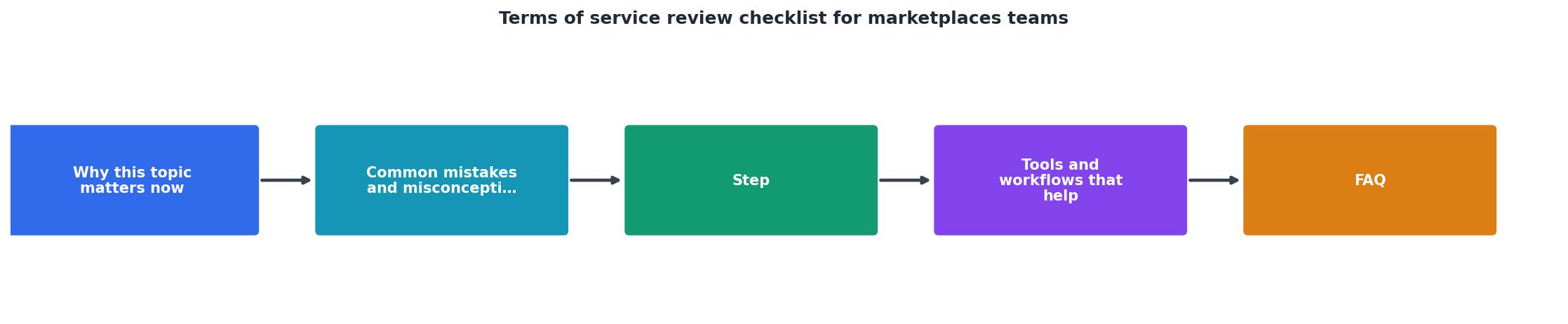
A haphazard approach to reviewing marketplace terms leads to gaps, contradictions, and missed red flags. Instead, follow a structured process:
Step 1: Assign ownership and timeline
Designate a single person or small team as "terms owner", usually a product manager, legal ops coordinator, or compliance lead. This person steers the review, coordinates input from ops, support, and legal, and owns version control. Set a realistic timeline: a comprehensive review takes 2–4 weeks for a mid-size marketplace.
Step 2: Audit your current terms
Pull the live version of your terms, your last major update, and any legal audit reports. Compare them to spot drifts between what's written and what your team actually does. For example, if your terms say refunds are processed within 30 days but your support team approves refunds in 5 days, that's a compliance gap.
Step 3: Map user workflows
Walk through your marketplace from a buyer's perspective, then a seller's, then a support agent's. At each step, note what your terms should say:
- Buyer flow: Signup → search → purchase → receive/dispute → review → payment complete
- Seller flow: Signup → list item/service → fulfill → handle returns → withdraw payment
- Support flow: Flag dispute → investigate → rule → enforce (payment reversal, suspension, or closure)
Step 4: Flag red-flag clauses for legal review
Use this as your filter: Does the clause limit liability, require arbitration, restrict user rights, permit data sharing, or bind users to auto-renewal or hidden fees? Mark those for a lawyer's review. Don't assume your old terms were right just because they were approved before, laws change, and so do platform practices.
Step 5: Document and track changes
Use version control (Google Docs with change tracking, or a shared Git repo). Note the date, what changed, and why. This creates an audit trail for regulators, users, and your own team when disputes arise.
Red flags to watch for
- One-sided liability caps that shield the platform but not users
- Arbitration clauses that prevent users from joining class-action lawsuits
- Vague refund policies that create support friction and chargebacks
- Data-sharing language that doesn't clearly explain how user info flows between buyers and sellers
- Auto-renewal or subscription terms buried in the fine print
As you review your terms, ask these questions:
- Is arbitration truly two-sided? If your terms force users into arbitration but your platform can still sue in court, that's not balanced and invites regulatory pushback.
- Are refund windows realistic? If you promise 30-day refunds but most transactions complete in 3 days, update your terms to match reality.
- Do you explain data sharing? If sellers can see buyer contact info, say so explicitly. Surprises breed complaints.
- What triggers account suspension? Spell out the rules and notice periods. Vague enforcement breeds distrust and support escalations.
- Can you change terms unilaterally? Most platforms can, but give users a real window to opt out (not 2 days) or the change will feel like a bait-and-switch.
Using Terms Doctor to stay ahead
Marketplace teams often overlook a hidden threat: your vendor terms of service change silently. Your payment processor updates their terms. Your analytics tool modifies their data retention policy. Your cloud host rewrites their uptime guarantee. You don't see these changes, but they can affect your compliance obligations and liability exposure.
Terms Doctor's 101 consumer-protection checks automatically flag high-risk clauses in vendor and partner terms, forced arbitration, auto-renewal, AI training on user data, unlimited liability, and more. Use the free Terms Doctor extension on your browser to check vendor terms as you onboard new services, and revisit them quarterly to catch silent updates before they surprise you.
Marketplace Terms of Service Review Checklist
Your progress is saved automatically in your browser.
FAQ
Frequently Asked Questions
Next steps: start your review today
Marketplace terms don't need to be perfect on the first pass, but they need to be clear, balanced, and aligned with how your platform actually operates. Begin with the seven critical sections outlined above. Assign an owner. Set a 4-week timeline. Involve your product, ops, and support teams, not just legal. Then have a lawyer give the final draft a review.
Want a fast way to spot high-risk clauses in your terms and your vendors' terms? Try the free Terms Doctor browser extension. It scans any terms of service for 101 consumer-protection issues, forced arbitration, auto-renewal, AI training on user data, and more, and grades terms A through F in plain language. Use it to benchmark your marketplace terms against competitors, spot gaps before they become problems, and monitor your vendor terms for silent changes.
Remember: automated checks are not legal advice. Always have a qualified attorney review your final marketplace terms before you publish them. But with this checklist and the right tools, you'll catch 90% of the issues on your own and ask your lawyer smarter questions.
Additional Resources
- Marketplace Terms Of Service: US Guide For Online Platforms - This guide explains federal and state requirements, practical examples, and step-by-step checklists to help you draft effective, compliant ...
- Terms of Service Review: All You Need to Know - A term of service review is a comprehensive process that oversees your organization's privacy policy, terms of service, and user agreement.
- Streamlining Vendor Contract Reviews: A Checklist - Streamline vendor contract reviews with this comprehensive checklist tailored for legal, sales, and procurement teams. Terms of Service Privacy
Ready to Read Terms Before You Sign?
Terms Doctor finds terms of service on any site and grades them A-F in seconds.
Get Started“Terms Doctor flagged forced arbitration and AI training clauses in seconds. I finally know what I am agreeing to.”
Privacy-conscious shopper